-
Call Now:
888-800-8032


 Office Timings Mon - Fri 09:00 am 5:00 pm
Office Timings Mon - Fri 09:00 am 5:00 pm
Office Timings Mon - Fri 09:00 am 5:00 pm
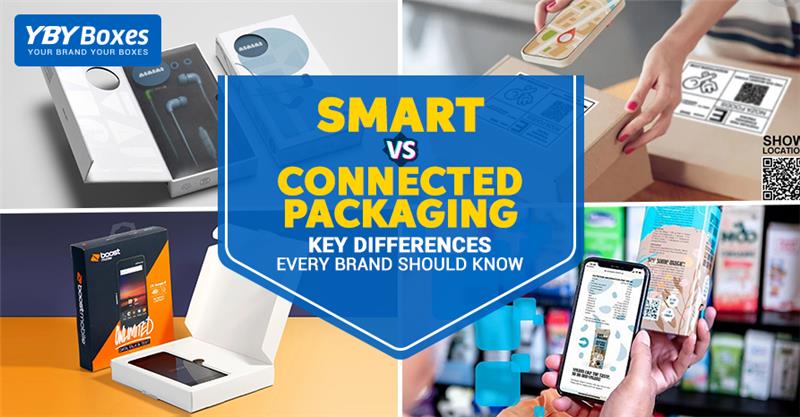
There’s a lot of talk about smart vs. connected packaging, and it can get a little confusing when choosing the right one.
Both smart and connected packaging can be considered the latest packaging technology, but the real question is choosing between them.
This blog post outlines the key differences between the two that every brand should know. Keep reading!
Smart packaging is a broader term related to packaging innovation and technology that makes packaging smart. In short, small packaging refers to action-oriented packaging that helps buyers or users.
On the other hand, connected packaging is an internet-connected packaging, like QR codes, etc. Other than QR codes, this type of packaging could be in the form of RFID chips or other mechanisms, helping customers get access to product information.
The following are the main differences that every brand should keep in mind.
Smart packaging is functional and plays an important role in doing something extra. This is all about sensing, reacting, extending product shelf life, and maintaining integrity.
Connected packaging by same suggests linking to something else, like digital content, supply‑chain networks, consumer engagement, and data capture.
Smart packaging is used to monitor the freshness of products. It preserves product quality through quality control, shelf-life extension, and safety indicators.
On the other hand, connected packaging enhances customer engagement through QR codes, NFC tags, and other types of technology. Additionally, it provides other benefits as well, like:
Let’s discuss which one is more technology-focused compared to the other. Smart packaging is mostly associated with sensors, time/ temperature indicators, and active materials. An example of this is temperature sensors in cold-chain logistics.
On the other hand, connected packaging means the use of digitalization like QR codes, NFC, RFID, and consumer-facing apps. This type of technology is completely different from smart packaging.
Interaction between brand and customer is a must to engage them, keeping them satisfied. With smart packaging, brands interact with customers by providing them with higher product quality through less waste and better shelf life.
On the contrary, connected packaging allows brands direct interaction with customers. Here’s how: scan the packaging to get instant access to product info, check authenticity through trackers, and join a loyalty program.
The visible supply chain process improves efficiency, reduces cost, and better risk management. Luckily, both smart and connected packaging benefit brands with improved supply chain visibility.
Want to know how? Smart packaging helps with product integrity and an efficient monitoring process. On the other hand, connected packaging improves traceability, digital records, time-tracking, and anti-counterfeiting.
If we talk about smart packaging, it may come up with higher costs due to expensive materials and technological costs. No doubt the cost is higher, but still can’t beat traditional packaging methods.
On the other side, connected packaging is not too expensive because QR codes & NFC tags are affordable to integrate into packaging. But one thing that connected packaging demands is the digitalization of everything.
Smart vs. connected packaging is changing how your brand’s packaging becomes unique from others. Both types of packaging have separate roles and purposes, but both work well for brands in various ways.
Both these packaging types are not only the latest packaging technologies; it changes the whole packaging and customer experience. You can choose between them based on your product, branding, and marketing requirements. Contact YBY Boxes USA to get a quote today.